"Great apply"
"Very significant!"
"I love it very much"
"Nice"
"My brother improve his tens by using this app"
224
Sub Topics
656
MCQs
252
MCOs
474
True/False
284
Fill Blanks
157
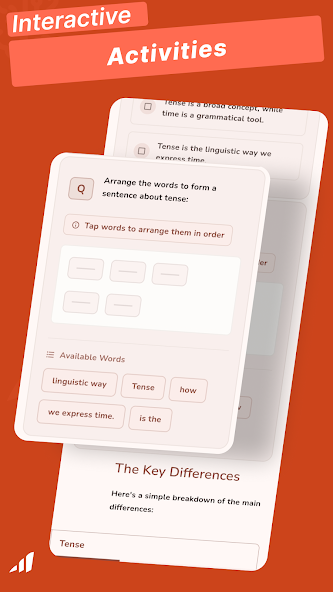
Rearrange
261
Matching
115
Comprehensions
237
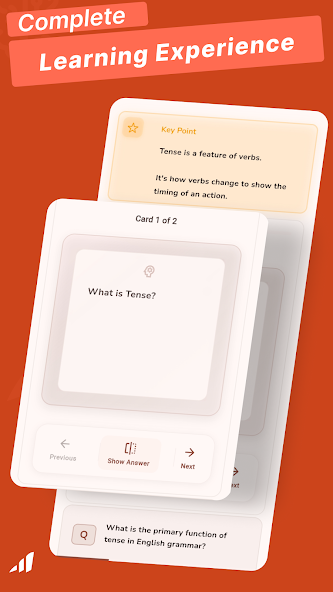
Flashcard Decks
Curriculum
What You'll Learn
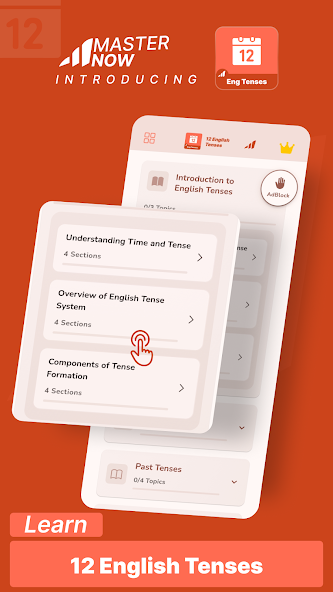
01 Introduction to English Tenses 3 topics
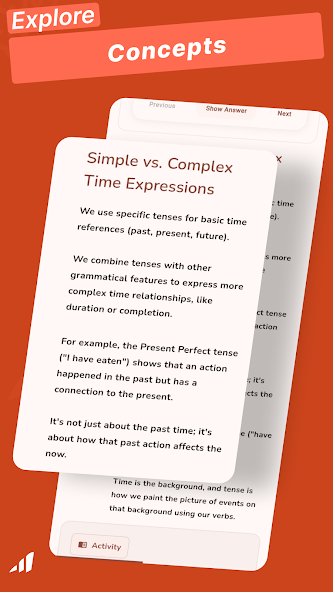
1 Understanding Time and Tense
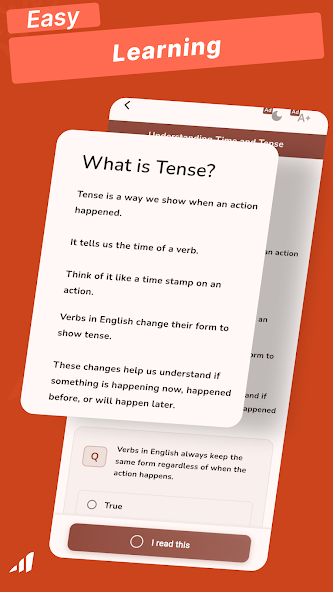
- Definition of tense
- Difference between time and tense
- Grammatical vs. natural time
- The concept of aspect
2 Overview of English Tense System
- Three primary time frames (past, present, future)
- Four aspects (simple, continuous, perfect, perfect continuous)
- The 12 basic tenses
- Additional tense forms and constructions
3 Components of Tense Formation
- Main verbs and auxiliary verbs
- Regular and irregular verbs
- Verb forms (base, past, past participle, present participle)
- Modal auxiliaries in tense formation
02 Present Tenses 4 topics
1 Simple Present Tense
- Formation and structure
- Affirmative statements
- Negative statements
- Interrogative forms
- Uses and functions
- Time expressions and adverbs
- Common mistakes and corrections
2 Present Continuous Tense
- Formation and structure
- Affirmative, negative, and interrogative forms
- Uses and functions
- Stative vs. dynamic verbs
- Time expressions
- Common errors and troubleshooting
3 Present Perfect Tense
- Formation and structure
- Affirmative, negative, and interrogative forms
- Uses and functions
- Time expressions (already, yet, just, ever, never, since, for)
- Present perfect vs. simple past
- Regional variations (American vs. British English)
4 Present Perfect Continuous Tense
- Formation and structure
- Affirmative, negative, and interrogative forms
- Uses and functions
- Time expressions and duration markers
- Present perfect continuous vs. present perfect
- Verbs not commonly used in continuous form
03 Past Tenses 4 topics
1 Simple Past Tense
- Formation and structure
- Regular and irregular past forms
- Affirmative, negative, and interrogative forms
- Uses and functions
- Time expressions for past
- Used to vs. simple past
2 Past Continuous Tense
- Formation and structure
- Affirmative, negative, and interrogative forms
- Uses and functions
- Time clauses with past continuous
- Past continuous vs. simple past
- Atmosphere and setting descriptions
3 Past Perfect Tense
- Formation and structure
- Affirmative, negative, and interrogative forms
- Uses and functions
- Time expressions and sequence markers
- Past perfect vs. simple past
- When past perfect is unnecessary
4 Past Perfect Continuous Tense
- Formation and structure
- Affirmative, negative, and interrogative forms
- Uses and functions
- Time expressions for duration
- Past perfect continuous vs. past perfect
- Context and narrative use
04 Future Tenses 4 topics
1 Simple Future Tense (Will)
- Formation and structure
- Affirmative, negative, and interrogative forms
- Contractions (will = 'll, will not = won't)
- Uses and functions
- Future time expressions
- Will vs. going to
2 Future Continuous Tense
- Formation and structure
- Affirmative, negative, and interrogative forms
- Uses and functions
- Time references and contexts
- Future continuous vs. other future forms
- Politeness and diplomatic language
3 Future Perfect Tense
- Formation and structure
- Affirmative, negative, and interrogative forms
- Uses and functions
- Time expressions (by, by the time, before)
- Future perfect in context
- Probability and speculation
4 Future Perfect Continuous Tense
- Formation and structure
- Affirmative, negative, and interrogative forms
- Uses and functions
- Time expressions for future duration
- Practical applications and contexts
- Complexity and style considerations
05 Alternative Future Forms 3 topics
1 Going to Future
- Formation and structure
- Affirmative, negative, and interrogative forms
- Uses and functions
- Going to vs. will
- Informal speech patterns
- Going to continuous and perfect forms
2 Present Tenses for Future
- Present simple for future
- Present continuous for future
- Choosing between present forms for future
- Context and certainty levels
3 Other Future Expressions
- Be about to
- Be due to
- Be to (formal arrangements)
- Modal verbs for future (may, might, could, should)
- Future in the past (was going to, would)
- Choosing the appropriate future form
06 Passive Voice in All Tenses 5 topics
1 Introduction to Passive Voice
- Active vs. passive voice
- When and why to use passive
- Formation principles
- Agent and instrument
2 Present Tenses in Passive
- Simple present passive
- Present continuous passive
- Present perfect passive
- Present perfect continuous passive (rare)
3 Past Tenses in Passive
- Simple past passive
- Past continuous passive
- Past perfect passive
- Past perfect continuous passive (rare)
4 Future Tenses in Passive
- Simple future passive (will be + past participle)
- Future continuous passive
- Future perfect passive
- Going to passive
5 Special Passive Constructions
- Modal verbs in passive
- Passive with phrasal verbs
- Passive with two objects
- Impersonal passive constructions
- Get-passive vs. be-passive
07 Reported Speech and Tense Changes 4 topics
1 Introduction to Reported Speech
- Direct vs. indirect speech
- Reporting verbs and their patterns
- When to change tenses
- Pronoun and time/place changes
2 Tense Backshifting Rules
- Present to past shifts
- Past to past perfect shifts
- Future to conditional shifts
- Modal verb changes
- When not to backshift
3 Reporting Different Sentence Types
- Reporting statements
- Reporting questions
- Reporting commands and requests
- Reporting suggestions and advice
4 Advanced Reported Speech
- Reporting with different time references
- Mixed reporting contexts
- Reported speech in academic writing
- Contemporary and informal reporting
08 Conditional Sentences and Tenses 5 topics
1 Introduction to Conditionals
- Types of conditional sentences
- Real vs. unreal conditions
- If-clauses and main clauses
- Alternative conditional words
2 Zero and First Conditionals
- Zero conditional (general truths)
- First conditional (real future possibilities)
- Time clause variations
- Unless, provided that, as long as
3 Second Conditional
- Formation and structure
- Unreal present situations
- Polite requests and suggestions
- Were vs. was in conditionals
4 Third Conditional
- Formation and structure
- Unreal past situations
- Regrets and criticism
- Modal variations in third conditional
5 Mixed and Advanced Conditionals
- Mixed conditionals
- Conditional with modal verbs
- Implied conditionals
- Inverted conditionals
- Alternative conditional constructions
09 Subjunctive Mood and Special Tense Uses 4 topics
1 Introduction to Subjunctive
- Subjunctive vs. indicative mood
- Present subjunctive forms
- Past subjunctive forms
- When subjunctive is required
2 Subjunctive in Different Contexts
- Wishes and regrets
- Formal suggestions and demands
- Hypothetical situations
- Fixed expressions and idioms
3 Special Tense Constructions
- Emphatic tenses (do/does/did + base form)
- Habitual past (used to, would)
- Be to constructions
- Historic present tense
4 Sequence of Tenses
- Primary sequence
- Secondary sequence
- Universal truths in subordinate clauses
- Sequence in complex sentences
10 Common Problems and Error Correction 4 topics
1 Frequent Tense Errors
- Present perfect vs. simple past confusion
- Continuous vs. simple form misuse
- Future form confusion
- Time expression errors
2 Interference from Other Languages
- Common L1 interference patterns
- False friends in tense systems
- Cultural concepts affecting tense use
- Strategies for overcoming interference
3 Consistency and Style
- Maintaining tense consistency
- Narrative tense choices
- Academic writing tense conventions
- Informal vs. formal tense use
4 Self-correction Strategies
- Identifying tense errors
- Using context clues
- Verification techniques
- Building tense awareness
11 Practical Applications 4 topics
1 Tenses in Academic Writing
- Research paper tense conventions
- Literature review tenses
- Methodology and results tenses
- Discussion and conclusion tenses
2 Business Communication
- Email and letter tenses
- Report writing tenses
- Presentation tenses
- Meeting and negotiation language
3 Narrative and Creative Writing
- Storytelling tense choices
- Character perspective and tense
- Flashbacks and time shifts
- Stream of consciousness techniques
4 Conversational English
- Informal tense use
- Contractions and reduced forms
- Regional variations
- Interactive communication patterns
12 Advanced Topics and Special Cases 4 topics
1 Aspectual Verbs and Tense
- Inceptive, continuative, and terminative aspects
- Phase verbs (begin, start, stop, finish)
- Aspectual be + ing constructions
- Iterative and habitual markers
2 Register and Style Variations
- Formal vs. informal tense use
- Literary and poetic tense use
- Technical and scientific writing
- Legal and official language
3 Dialectal and Regional Variations
- British vs. American English differences
- Historical development of tense forms
- World Englishes and tense variation
- Social and situational variation
4 Future Developments and Trends
- Evolving tense usage patterns
- Influence of digital communication
- Cross-linguistic influences
- Prescriptive vs. descriptive approaches


Explore More






















































































































































































































12 English Tenses
Get it on Google Play