Master reported speech and quotations
142
Sub Topics
398
MCQs
172
MCOs
324
True/False
174
Fill Blanks
90
Rearrange
163
Matching
79
Comprehensions
153
Flashcard Decks
Curriculum
What You'll Learn
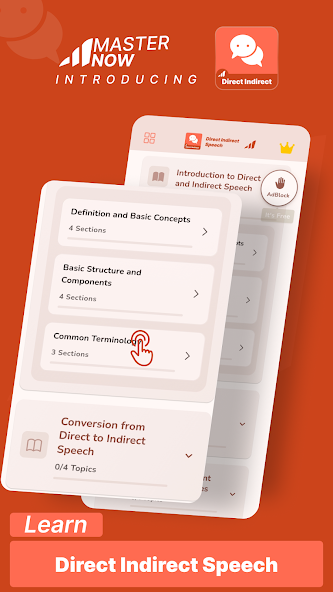
01 Introduction to Direct and Indirect Speech 3 topics
1 Definition and Basic Concepts
- What is Direct Speech?
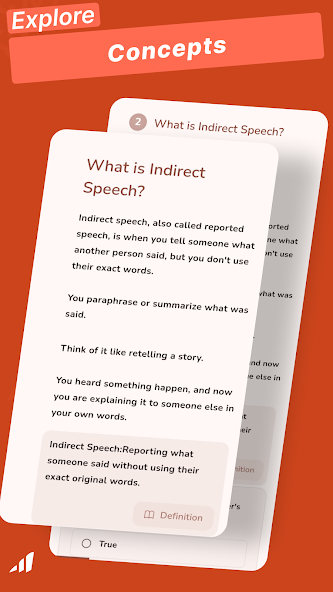
- What is Indirect Speech?
- Key differences between Direct and Indirect Speech
- Why learn Direct and Indirect Speech?
2 Basic Structure and Components
- Reporting verb (said, told, asked, etc.)
- Reporting clause and reported clause
- Use of quotation marks in Direct Speech
- Integration techniques in Indirect Speech
3 Common Terminology
- Speaker, listener, and reporter
- Reporting verbs vs. reported speech
- Backshift and sequence of tenses
02 Conversion from Direct to Indirect Speech 4 topics
1 Basic Rules and Principles
- General conversion rules
- Backshift of tenses concept
- Changes in pronouns
- Changes in time and place adverbials
2 Tense Changes (Backshift)
- Present Simple → Past Simple
- Present Continuous → Past Continuous
- Present Perfect → Past Perfect
- Past Simple → Past Perfect
- Future Simple (will) → Conditional (would)
- Modal verbs transformations
3 Pronoun Changes
- First person pronouns
- Second person pronouns
- Third person pronouns
- Possessive pronouns and adjectives
4 Adverbial Changes
- Time expressions (today → that day, tomorrow → the next day)
- Place expressions (here → there, this → that)
- Demonstratives and determiners
03 Reporting Different Types of Sentences 4 topics
1 Reporting Statements (Declarative Sentences)
- Affirmative statements
- Negative statements
- Complex statements with multiple clauses
- Reporting with different reporting verbs
2 Reporting Questions (Interrogative Sentences)
- Yes/No questions (using 'if' or 'whether')
- Wh-questions (using question words)
- Choice questions
- Tag questions
- Indirect questions in formal contexts
3 Reporting Commands and Requests (Imperative Sentences)
- Positive commands
- Negative commands (prohibitions)
- Polite requests
- Suggestions and advice
- Using infinitive structures
4 Reporting Exclamations (Exclamatory Sentences)
- Expressions of surprise, joy, sorrow
- Using 'that' clauses
- Reporting with appropriate emotion verbs
04 Advanced Reporting Verbs 4 topics
1 Classification of Reporting Verbs
- Neutral verbs (say, tell, ask)
- Verbs indicating manner of speaking
- Verbs indicating emotion or attitude
- Verbs for specific speech acts
2 Specific Reporting Verbs for Statements
- Admit, agree, announce, argue, claim
- Complain, confess, deny, explain, insist
- Mention, promise, suggest, warn, etc.
3 Specific Reporting Verbs for Questions
- Ask, inquire, wonder, question
- Demand to know, want to know
4 Specific Reporting Verbs for Commands
- Order, command, instruct, direct
- Advise, recommend, suggest, urge
- Forbid, prohibit, warn against
05 Special Cases and Exceptions 4 topics
1 Universal Truths and Facts
- No tense change for scientific facts
- Habitual actions and general truths
- Mathematical and historical facts
2 Mixed Time References
- When the reporting verb is in present/future
- Recent past reporting
- Simultaneous actions
3 Conditional Sentences in Reported Speech
- Real conditionals (Type 1)
- Unreal conditionals (Type 2)
- Past unreal conditionals (Type 3)
4 Modal Verbs and Their Transformations
- Will → would, can → could, may → might
- Must, should, ought to (no change cases)
- Could, would, might (already past forms)
06 Punctuation and Style 3 topics
1 Punctuation in Direct Speech
- Quotation marks usage
- Capitalization rules
- Comma placement
- Reporting verb positioning
2 Style in Indirect Speech
- Smooth integration techniques
- Avoiding repetitive reporting verbs
- Connecting ideas with appropriate conjunctions
- Maintaining narrative flow
3 Formal vs. Informal Reporting
- Academic and professional contexts
- Conversational reporting
- Legal and official documentation
- Journalistic reporting
07 Practical Applications 4 topics
1 In Academic Writing
- Citing sources and references
- Paraphrasing and summarizing
- Literature reviews
- Research reporting
2 In Professional Communication
- Meeting minutes
- Email reporting
- Business presentations
- Legal documentation
3 In Journalism and Media
- News reporting
- Interview transcriptions
- Press releases
- Feature articles
4 In Creative Writing
- Character dialogue
- Narrative techniques
- Stream of consciousness
- Multiple perspectives
08 Common Mistakes and How to Avoid Them 4 topics
1 Tense-related Errors
- Incorrect backshift applications
- Mixing direct and indirect styles
- Universal truth misconceptions
2 Pronoun and Reference Errors
- Unclear pronoun references
- Incorrect pronoun changes
- Maintaining clarity of meaning
3 Time and Place Confusions
- Inconsistent adverbial changes
- Context-dependent modifications
- Relative time expressions
4 Reporting Verb Misuse
- Inappropriate verb choices
- Structural errors with specific verbs
- Register and formality issues
09 Cultural and Contextual Considerations 3 topics
1 Cross-cultural Communication
- Cultural differences in reporting
- Politeness and indirectness
- High-context vs. low-context cultures
2 Register and Appropriateness
- Formal vs. informal contexts
- Academic vs. conversational registers
- Professional communication standards
3 Legal and Ethical Implications
- Accuracy in reporting
- Attribution and plagiarism
- Defamation and liability issues
10 Practice and Assessment 3 topics
1 Progressive Exercises
- Basic conversion exercises
- Intermediate mixed practice
- Advanced contextual applications
- Error identification and correction
2 Real-world Applications
- Case studies and examples
- Authentic text analysis
- Practical scenarios
- Problem-solving exercises
3 Self-assessment Tools
- Diagnostic tests
- Progress tracking
- Peer review activities
- Portfolio development
11 Technology and Modern Applications 3 topics
1 Digital Communication
- Social media reporting
- Email and messaging
- Video conferencing transcripts
- Digital journalism
2 Language Learning Technology
- Online exercises and apps
- AI-assisted practice
- Interactive multimedia tools
- Virtual reality applications
3 Translation and Interpretation
- Machine translation challenges
- Human interpretation skills
- Cross-linguistic considerations
- Professional translation practices



Explore More




































































































































































































































Direct Indirect Speech
Get it on Google Play